
Just a heads up, this post contains some affiliate links. That means that we earn a small commission if you buy the product at no extra cost to you. That allows us to continue to research and share interesting articles with you. :)
To fill a raised bed over garden soil, use good-quality topsoil enriched with mature compost, and calculate the volume from the bed’s internal length, width and filling depth. A planter with a solid base needs suitable container compost and drainage. The right approach depends on what is underneath the bed as much as what goes into it.
Before buying a stack of compost bags, grab a tape measure. A few minutes working out the actual space can save a surprisingly expensive trip back to the garden centre.
What should you put in a raised bed?
For a permanent, open-bottomed vegetable bed, a soil-based fill gives roots a stable growing medium. Garden compost improves it, but a bed filled entirely with decomposing organic material will settle substantially. Topsoil and subsoil are different: topsoil is the upper, biologically active layer; subsoil is not an equivalent growing medium.
- Good existing garden soil: keep it and improve the surface rather than automatically replacing it.
- An empty frame over soil: buy suitable topsoil or a vegetable raised-bed blend and incorporate mature organic matter as needed.
- A trough or planter with a base: choose peat-free compost labelled for container growing and check the planter’s drainage.
There is no compulsory one-third recipe for every garden. Check what a bought blend already contains before adding more ingredients. The RHS guide to growing vegetables in raised beds explains why soil provides a more lasting base than compost alone.

Calculate how much soil you need
Litres = length in metres × width in metres × filling depth in metres × 1,000. Measure inside the frame and use the depth you actually need to fill, allowing a little space below the rim for watering.
Use our free compost and soil calculator to work out volumes and bags, including mixed measurements. For a top-up, enter only the depth of the new layer.
| Internal bed size | Filling depth | Volume | 50-litre bags, rounded up |
|---|---|---|---|
| 1.2m × 2.4m | 30cm | 864 litres | 18 |
| 1.2m × 3m | 20cm | 720 litres | 15 |
| 1.2m × 3m | 5cm top-up | 180 litres | 4 |
These are calculated volumes before settlement. A bed measuring exactly 4ft × 8ft × 1ft holds about 906 litres; the rounded metric dimensions in the first row are slightly smaller. Measure your own frame rather than treating the two as identical.
For mixed materials, divide the total volume between them. Do not order the full volume in topsoil and then the full volume again in compost. Ask bulk suppliers for the volume supplied: a “bulk bag” is not necessarily one cubic metre, and weight varies with moisture.
How deep does a raised bed need to be?
Roots in an open-bottomed bed can grow into usable soil below, so the height of the wooden frame is not the whole rooting depth. A bed on paving or with a solid base has a fixed root space and needs planning around the mature crop.
Choose the crop before choosing a shallow planter. Salad leaves need less room than a large tomato plant or long-rooted carrots. Check the seed packet and planter specifications; a thin topping of compost over wood chips is not a universal vegetable-growing solution.
Fill the bed step by step
- Check the site. Make sure you can reach the middle without standing on the soil. Plan water access before filling a heavy bed.
- Prepare the ground. Remove rubbish and tackle persistent weeds. Our allotment soil preparation guide covers digging and no-dig options.
- Check drainage. A raised frame does not fix a site where water has nowhere to go. Avoid sealing an open-bottomed bed with an impermeable liner.
- Add the suitable growing medium. Spread it evenly, breaking up large clods. Do not stamp it down into a hard surface.
- Water and reassess. Let the fill settle, then top up if needed. Keep enough room below the edge to water comfortably.
- Plant for the available space. Follow crop spacing, then monitor moisture as the plants establish.
For the construction side, watch our video about making allotment raised beds from pallet wood.
Can you fill a raised bed cheaply?
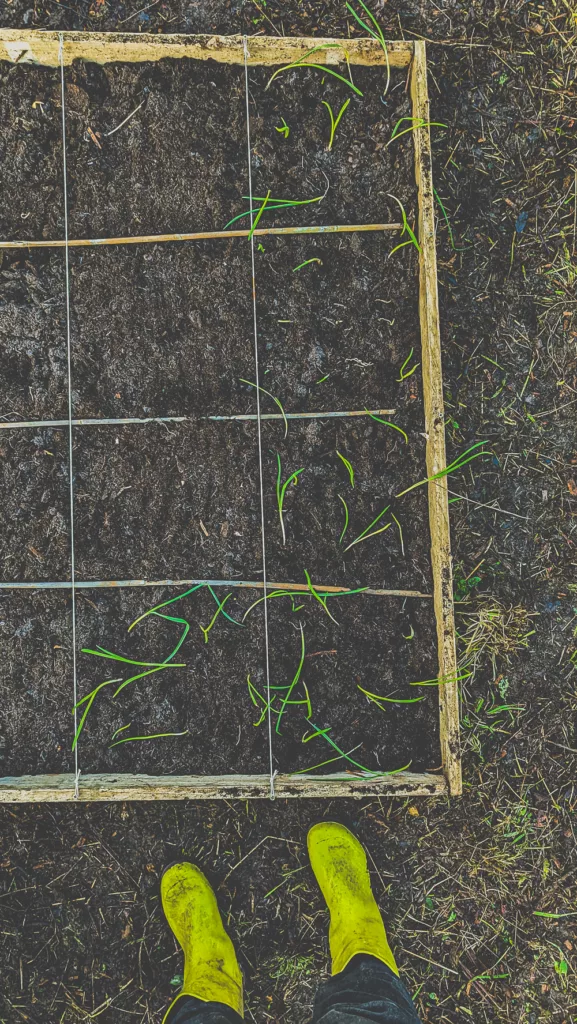
Start with soil you already have if it is suitable, compare delivered bulk prices against bags, and make one manageable bed first. Deep beds filled with woody material may settle as it decays; that approach needs enough proper rooting medium above and ongoing top-ups. It is not a like-for-like replacement for soil.
You may not need a frame at all. A ground-level bed can be productive, leaving more of your budget for plants and watering. Our beginner’s kitchen garden guide helps you choose a sensible starting size.
Raised-bed filling questions
Can I use only compost?
Container compost is appropriate for many planters, but an enduring open-ground bed is usually better with a soil-based fill. Homemade garden compost is a soil improver, not the same product as bagged potting compost.
Should I replace all the soil each year?
Usually no. Remove weeds, replenish organic matter where needed and feed according to the crops and soil conditions. Replacing the whole bed annually adds expense and unnecessary disturbance.
Do raised beds always save water?
No. They can dry out quickly, especially in warm, windy weather. Check moisture below the surface and plan watering before leaving crops unattended.
For seasonal growing ideas that fit real life, join The Wealth Pantry, our free fortnightly newsletter.
Reviewed and updated October 2026. By Niki Wilkinson, Back To The Good Life.
Back To The Good Life is a participant in the Amazon Services LLC Associates Program, an affiliate advertising program designed to provide a means for sites to earn advertising fees by advertising and linking to Amazon.com. We also participate in other affiliate programs which compensate us for referring traffic.
2 Comments
Comments are closed.