

Just a heads up, this post contains some affiliate links. That means that we earn a small commission if you buy the product at no extra cost to you. That allows us to continue to research and share interesting articles with you. :)
Glass is a strong choice for clear views and good light transmission; multiwall polycarbonate is useful where impact resistance and insulation matter. Neither material makes a poorly built greenhouse a good purchase. Compare the frame, panel fixing, base, ventilation and replacement parts alongside the glazing.
Start with what you want to grow and how you will use the space. A greenhouse is an ongoing watering and ventilation commitment as well as somewhere to put tomatoes.
Glass and polycarbonate at a glance
| Consideration | Glass | Polycarbonate |
|---|---|---|
| Light and appearance | Clear views and generally high light transmission | Appearance and transmission vary with panel construction |
| Insulation | Standard single glazing loses heat readily | Multiwall panels generally insulate better than single glass |
| Impact | Can break; distinguish horticultural from toughened glass | Impact-resistant, but panels still need secure fixing |
| Maintenance | Cleaning and checks on glazing supports and seals | Cleaning with compatible products; checks on fixings and panel condition |
| Cost | Depends on specification and installation | Depends on thickness, frame and overall quality |
The RHS greenhouse-buying guide sets out the main differences. Compare actual models rather than assuming all glass or all plastic greenhouses perform alike.
When glass is worth considering
Glass suits gardeners who value a clear view through the structure and good light levels. Check the type supplied: standard horticultural glass and toughened safety glass are different specifications, not interchangeable descriptions.
Ask how broken panes can be replaced, whether sizes are readily available and how glazing is retained. Consider nearby paths, play areas and other sources of impact. Toughened glass still needs sensible siting and installation.
When polycarbonate is worth considering
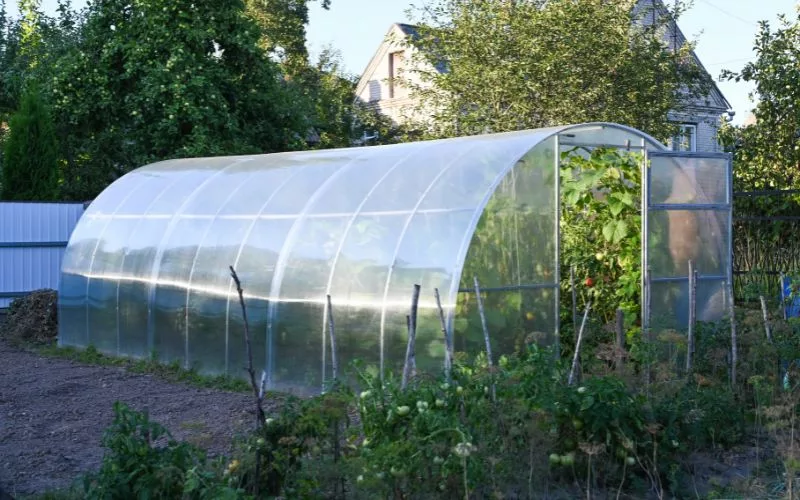
Polycarbonate can suit locations where impact resistance is a priority. Multiwall panels contain air spaces that help insulation, but a thin single sheet is a different product. Ask for panel thickness, light-transmission information and the conditions of any guarantee.
Check the manufacturer’s installation requirements, including the correct orientation of UV-protected surfaces where applicable. Lightweight panels need the right retaining system; “impact-resistant” does not mean a poorly secured panel cannot come loose.
Will either greenhouse stay warm all winter?
An unheated greenhouse can still fall to temperatures that damage tender plants. Better insulation slows heat loss; it does not create a permanent heat supply. Decide whether your crops need frost protection and how you would provide it before relying on the structure for overwintering.
For summer tomatoes, start with our UK tomato-growing guide. For a smaller protected-growing project, our guide to strawberries in a cold frame explains the limits of unheated shelter.

Ventilation deserves part of the budget
Both glass and plastic structures can overheat in sunshine. Check roof vents, lower ventilation and access to doors. If you are away during the day, consider whether automatic openers are suitable for the model, and remember they still need checking.
Shading may be needed, depending on the plants and conditions. The RHS ventilation and shading guide explains why managing summer heat matters with either glazing material.
Compare the whole installed cost
Write down the price of the structure, base preparation, anchoring, delivery, assembly, staging and any ventilation extras. Include replacements and maintenance in the decision. The cheapest advertised frame may not be the cheapest usable growing space.
Measure the footprint with the door open. Leave working room for watering, harvesting and cleaning; a greenhouse filled wall-to-wall with pots soon becomes difficult to manage. Our container-size guide helps you allow for mature plants rather than just seedlings.
Keep it useful after installation
Clean glazing to maintain light, remove unwanted plant debris and inspect moving parts and fixings. Use cleaning methods compatible with the material. The RHS greenhouse-cleaning guide covers glass and plastic structures.
Check plants regularly rather than expecting an enclosed space to exclude pests. Our guide to pest-repellent plants and their limits explains where planting combinations may help and where more direct action is needed.
A simple buying decision
- List the crops and seasons you want to cover.
- Check the site, access and exposure.
- Compare glazing specifications and frame quality.
- Price a complete installation with useful ventilation.
- Ask about replacement panels, parts and maintenance.
If the budget or routine does not fit yet, begin with outdoor crops or a smaller structure. Our kitchen garden starter guide offers ways to grow useful food without making a greenhouse the first purchase.
For seasonal growing ideas that fit real life, join The Wealth Pantry, our free fortnightly newsletter.
Reviewed and updated October 2026. By Niki Wilkinson, Back To The Good Life.
Back To The Good Life is a participant in the Amazon Services LLC Associates Program, an affiliate advertising program designed to provide a means for sites to earn advertising fees by advertising and linking to Amazon.com. We also participate in other affiliate programs which compensate us for referring traffic.

One Comment
Comments are closed.