

Just a heads up, this post contains some affiliate links. That means that we earn a small commission if you buy the product at no extra cost to you. That allows us to continue to research and share interesting articles with you. :)
Established strawberry plants are generally hardy outdoors in the UK. Winter care is mainly about drainage, removing dead or diseased material and protecting exposed containers during severe cold. Most plants do not need a heated indoor home.
When the harvest ends, it is tempting to assume every plant needs a major winter makeover. With strawberries, start by looking at what you have: established plants in the ground need a different level of attention from small pots on an exposed balcony.
What to do with strawberry plants at the end of the season
- Remove rotting fruit and dead or visibly diseased leaves.
- Check that soil or container compost drains freely.
- Keep the crown, where leaves emerge, clear of piled-up compost and wet debris.
- Decide whether exposed pots need a more sheltered position.
- Label varieties and note which plants cropped well before you forget.
That last job is particularly useful if your garden contains several identical-looking pots and the labels disappeared some time in June. You can make next year’s decisions much easier with a brief note now.

Do strawberry plants need frost protection?
Ordinary winter cold is not automatically a problem for established plants. The vulnerable parts and conditions matter: open flowers can be damaged by spring frost, while roots in small containers have less insulation than roots in the ground.
Temporary protection can help in severe weather, but avoid leaving a wet, airless covering over the plants for the whole season. Check under any protection and remove or ventilate it when appropriate.
The RHS strawberry-growing guide distinguishes ordinary plant care from protecting flowers and bringing crops forward.
How to overwinter strawberries in pots
| Check | Practical action |
|---|---|
| Water collecting underneath | Empty saucers and check drainage holes. |
| A very exposed position | Move pots into shelter where feasible. |
| Prolonged hard frost forecast | Consider insulating the container or using an unheated protective structure. |
| Pots under a roof or cover | Check moisture: rainfall may not reach them. |
A cold frame is one option if you already have one. It is not a compulsory purchase. Our separate guide to strawberries in a cold frame covers ventilation and the difference between winter shelter and encouraging an earlier crop.
Should you cut strawberries back for winter?
Remove dead, damaged or diseased foliage, but do not automatically shear every plant down as winter starts. Routine renovation of summer-fruiting plants belongs after their harvest; perpetual-fruiting plants need different treatment.
Strawberries have crowns, leaves and runners. They do not have the spent fruiting canes you would remove from some raspberry varieties. If advice tells you to cut strawberry canes, it has mixed up its crops.
If you do not know your variety, tidy selectively and identify it before making a drastic cut. Keeping healthy foliage is a more considered starting point than applying an instruction intended for another plant.
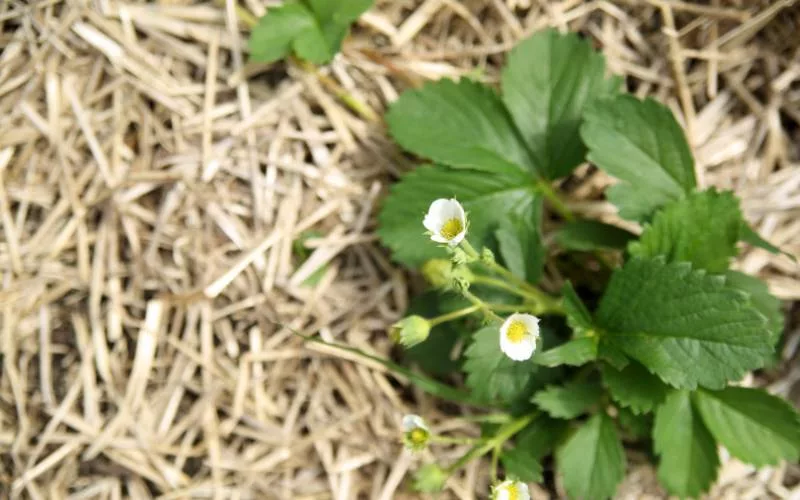
Do strawberries need watering or feeding in winter?
Check moisture rather than watering on a fixed schedule. Sheltered pots may dry out even while the rest of the garden is wet. Water when needed, allowing excess to drain, and avoid keeping the roots saturated.
There is no need to feed dormant plants on a monthly winter timetable. Plan feeding around active growth and the product’s instructions. Buying a bottle now will not make December behave like June.
Will everbearing strawberries produce fruit all winter?
No: “everbearing” does not mean a dependable year-round crop in an ordinary UK garden. These varieties extend the season, but short days and winter conditions still limit production. Garden Organic’s strawberry guide describes summer-to-autumn harvests across the different types.
The aim of overwintering is to keep the plants in good condition for the next growing season. It is a useful job even when there is nothing to pick.
What to check when spring returns
Look for new growth, remove remaining dead material and adjust watering as demand increases. Protect open flowers if frost threatens. If a plant fails to recover, investigate its roots and crown rather than immediately assuming the whole winter-care routine was wrong.
For the wider garden, see our jobs before winter guide. Start with the plants most exposed to problems; you do not have to wrap the entire garden in fleece.
For seasonal growing ideas and manageable ways to build a more self-reliant home, join The Wealth Pantry, our free fortnightly newsletter.
Reviewed and updated October 2026. By Niki Wilkinson, Back To The Good Life.
Back To The Good Life is a participant in the Amazon Services LLC Associates Program, an affiliate advertising program designed to provide a means for sites to earn advertising fees by advertising and linking to Amazon.com. We also participate in other affiliate programs which compensate us for referring traffic.

One Comment
Comments are closed.